
Maggie and I had Picasso for lunch today. Not literally – we went to the Hungarian National Gallery in the middle of the day, when it would be least crowded. We didn’t expect a retrospective – there was a little bit of almost every phase of his career: student paintings; Blue Period; cubism; harlequins; huge constructions and deconstructions of wives and lovers; ceramics; sculptures; and finally little bitty pen and ink sketches he did at 80. Absolutely overwhelming, especially on an empty stomach. There’s also a huge collection of Hungarian art in the museums’ permanent collection. The ticket price is pretty reasonable, so we may have to go back.
The highlight of the day for us was the exhibit of the Russian avant garde artists from 19010-1920. We knew nothing about the Russian avant garde, which is why we wanted to see it. The exhibit is from the Ekaterinburg Museum of Fine Arts, which is about 1000 miles east of Moscow, so it’s safe to say we weren’t going to get another chance to see it.
It turns out that Wassily Kandinski and Sergei Eisenstein were part of the Russian avant garde movement, so there were two familiar names, anyway. Other than that, it was all new to us. We were impressed by the variety of styles, some unique to Russia, but a lot of them mirroring Cezanne, Picasso, Matisse and others. There was more freedom of expression allowed than we would have thought, even after the Communist revolution. (Part of that freedom was due to some pieces having been hidden in the network of caves under Buda, so they were preserved from Stalin’s attempts to destroy them.)


Two paintings from the exhibit,“Jewish Venus” by Mikhail Larionov and “Suprematist No. 38” by Kazimir Malevich
A big part of the exhibit was devoted to film, where they told a little about the film makers and showed clips of the movies, a lot of them documentaries. Some of the scenes were heartbreaking: children scavenging through garbage to find something edible; other children as thin as inmates of a Nazi death camp. Those were contrasted that with the Russian propaganda of the time, showing happy peasants toiling away at a bountiful harvest – a complete lie that hid the famine caused by Stalin’s collectivization of the farms.
We came away with a broader understanding of the Russian people, but saddened thinking what would have been possible if all of this human potential hadn’t been crushed by the Communists.
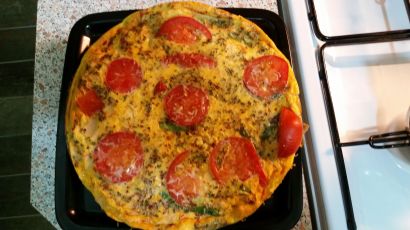
 According to our funky clock in the apartment, it was time to cook in this dinky kitchen. I decided that an easy meal was an Italian Frittata. Easy? At home yes, but I am still getting use to this “interesting” stove. You have to light it with matches, and there are no degrees marked on the front of the stove so I just have to guess at the temperature. I think it worked because dinner was delicious.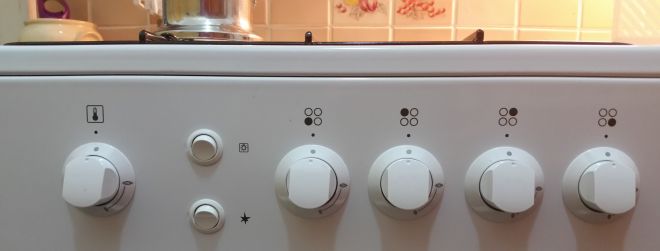


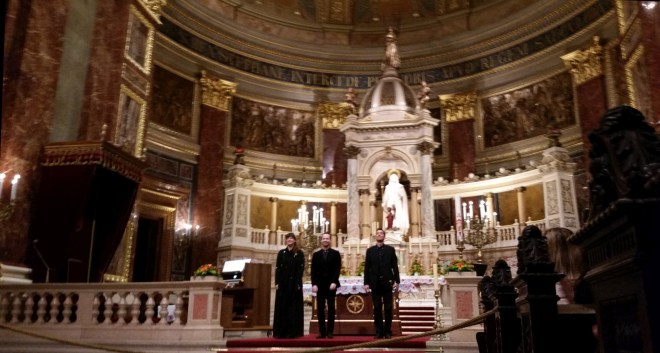
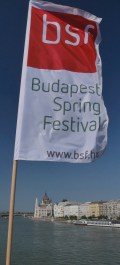 It’s the Spring Festival in Budapest, and there’s music everywhere. The events cover opera, jazz, classical, choral, dance, spoken word, Hungarian folk music, percussion and indefinable acts like




 Clay and Maggie Travel